Wednesday, December 26, 2007

Strap Yourself to the Wagon: 5 Ways to stay Fit Throughout the Holidays!


1. Warn someone in charge of cooking and planning events that you have certain goals tactfully and in advance.


I informed my step mom a week before going home that I am getting ready for a contest. It's better to make the person preparing food aware ahead of time rather than refusing to eat anything upon arrival. Offer to prepare all of your own food or help with food prep to make yourself useful and ensure that your food is acceptable.

2. Just toss the cookies at home NOW!


This applies to pies and holiday candies too; they're not fresh now and you will consume them if they are easily accessible. Step away from the dessert table! Play with you niece; show off the three chords you can strum. Crappy food is totally not the point of the season!

3. Always have lean protein and cut veggies ready to eat now! Bring the token veggie platter to parties and stick to that.


Healthy alternatives need to be available to choose the healthy food! Be proactive and ensure that you have what you need on hand!

If you really need something sweet, bring a few pieces of hard candy and have one if the urge strikes. They are only 20 Calories and will last far longer than a cookie!


4. Think of yourself as a role model for relatives that want to live healthier.


If people can see you following a plan, it may give them more motivation. Tune out naysayers and stick to your goals!

If you have a relative who has been seriously interested in exercising, get bundled up and go for a walk or a sledding adventure. Show your loved one that fitness is a lifestyle that should begin before the New Year and continue indefinately!


5. Change your gym schedule so that it works during this time period.


Right now I am with my family in NY. Usually I work out in the very late afternoon or early evening; it's the time that usually fits well into my schedule and I feel pretty strong at that time. However, in NY, my parents get out of work at in the evening, and I am not going to ditch them every night to maintain my normal gym schedule. As such, I've shifted to morning workouts, even though I hate it. Compromise a little so that you can keep a regular schedule without conflict or guilt.


Give yourself the time to treat your body well--it will thank you!

Friday, December 21, 2007

Big Bad Baby Booty: Key Points for Pregnancy Diet

Hey Jean,

Need some advice. I have a friend of mine who just found out she is prego...I always work with fitness and bodybuilders on their nutrition, but she came to me looking for some advice on getting back in shape with her nutrition while being pregnant.(Im Clueless!!) Can you give me some advice or put together a sample eating plan I could show her?

JB

Great question! Pregnant women should maintain activity levels and increase weight slowly throughout the course of incubating the little babe. It is never advisable to lose weight during pregnancy!

With regard to exercise, walking and light weight-lifting is great, even if it's a new program. Exercising during pregnancy at an appropriate intensity is definitely beneficial! On the other hand, if a woman already lifts heavy weights, she can continue to do so throughout the pregnancy, as long it is comfortable for her.

In terms of nutrition during pregnancy, a woman may need only 100-300 additional Calories per day during the first trimester; she does not need to gain more than five pounds during the first trimester. To give some perspective, 100 Calories is one hearty slice of bread; 1/2 cup cottage cheese with a large banana and a tablespoon of honey is about 300 Calories. Being prego is not a reason to endulge in pints of Ben and Jerry's, but is a time to take in a little extra food, and most importantly, ensure that you have adequate vitamins and minerals. Adequate vitamin intake is vital to nurturing a healthy fetus. For instance, if adequate folic acid is not available during the first month of pregnancy, your baby will be at risk of a neural tube defect, which is a devastating and potentially fatal condition. It is so important to consistently take a prenatal vitamin, recommended by a doctor, before and throughout your pregnancy!

During the last two trimesters, an extra 300 kcal per day is recommended. If a woman is obese (BMI >30) she needs to only gain 5 pounds throughout the entire pregnancy. If she is normal weight, 15-20 pounds is the lower end of appropriate weight gain. If the future mom is underweight, 20-30 pounds is the minimum.

There is obligatory weight gain during pregnancy because a woman gains about 10 pounds of extra fluid, blood volume actually increases. Additionally, the placenta weighs several pounds.

Be wary of all over the counter supplements during pregnancy. In fact, I would avoid them all together. Possible mercury and lead contamination issues will be magnified in an fetus. Furthermore, there is not evidence in research to support the safety of nearly all supplements while carrying a child. Stick to the prenatal vitamin recommended by your doctor to meet your needs.

The best approach for staying fit throughout a pregnancy is to maintain a very consistent, low to moderate level of exercise. Nutrition is paramount; eat healthfully and avoid funky ice cream and fast food cravings like the plague-- your dietary habits during pregnancy can influence your children later in life!

Post-birth fitness is also very important. Furthermore, breast-feeding is not only better for the baby but requires about an extra 500 Calories/day, depending on the baby and frequency of breastfeeding. A woman can lose extra baby booty and keep the infant nourished by increasing exercise intensity and keeping her dietary Calorie level at "normal" pre-pregnancy level.

Sunday, December 16, 2007

Ten High-Protein Foods: Ten Tasty Solutions


1. 1% Cottage Cheese: Berry High Protein Frozen Whip (EASY)

- Combine ½ cup cottage cheese, ½ cup frozen raspberries, and 1-2 packets of artificial sweetener in a mini food processor; process until completely smooth, 2-4 minutes eat immediately.

Nutrition: 125 Calories, 19 g protein (72% of calories), 10 g carb, 5 g fiber 1 g fat

2. Frozen Chicken Breast Tenders: Make-Believe Wings Dipped in Blue (EASY)

- Cook 10 tenders in the oven at 350 for about 20 minutes until done

- Combine in mini food processor, ¼ cup cottage cheese, ¼ cup of fat-free sour cream
and 2 Tbsp of hot sauce (or to taste)

- Cut up cooked chicken and mix with hot sauce

Serves 4

Nutrition: 146 Calories, 26 g protein (75% of calories), 3 g carb, 0 g fiber 2.5 g fat


3. Chocolate or Vanilla Whey Protein: Post work-out Dessert (EASY)

- Combine in mini food processor, 1 scoop (1 oz) chocolate whey protein, ½ banana (frozen, cut into chunks), ½ cup frozen pinapple, 1 tsp BCAA, 1 tsp creatine

- Process until completely smooth, consistency of cool whip

Nutrition: 204 Calories, 25 g protein (49% of calories), 24 g carb, 2 g fiber 2 g fat


4. Canned Tuna: High Protein, Low Fat Tuna Salad (EASY)

- Combine one can tuna, ¼ cup fat-free sour cream, and 4 wedges babybel light garlic and herb cheese

-Optional: Also add 1 chopped celery stalk and 2 Tbsp chopped onions

Nutrition: 381 Calories, 55 g protein (61% of calories), 14 g carb, 0 g fiber 9 g fat


5. Egg Substitute (Like Egg Beaters): Low- Fat Roasted Vegetable Frittata

- Roast 3 cups chopped fresh veggies: onions, mushrooms, pepper, zucchini are all good: spray cookie sheet with spray oil, place veggie in a single layer, salt, pepper, and sprinkle with balsamic vinegar and place in oven at 350 F for 30-35 minutes

- Combine one container of egg substitute (2 cups), roasted veggies, 2 Tbsp fresh
chopped basil (or 1 Tbsp dried), and ½ cup shredded 75% fat-free cheddar cheese

- Pour into small cake pan (sprayed with oil), cover with foil and bake at
350 F for about 30 minutes or until set in the middle.

Serves 4

Nutrition: 126 Calories, 17 g protein (72% of calories), 8 g carb, 1 g fiber 2.6 g fat


6. Egg Whites (Fresh): Strangely Wonderful Egg White Foam Breakfast

- Microwave 1 cup frozen strawberries until hot, stir and add ¼ tsp of ground cinnamon and 2 packets artificial sweetener

- Combine in very clean glass bowl, 3 egg whites, 1/8 tsp cream of tartar; beat white into foam with hand mixer until stiff peaks form, gently scoop into large frying pan, pre-warmed on medium heat and sprayed with oil, cover with lid (egg whites should not fill more than half the frying pan)

- Flip once bottom is set, about 1.5-2 minutes (this takes practice)

- Pour strawberry mixture over egg white and enjoy immediately

Nutrition: 95 Calories, 11 g protein (55% of calories), 12 g carb, 3 g fiber 1 g fat

7. Defatted Soy Granules: Protein-Packed Pancake
- Soak ¼ cup of soy granules in ½ cup of egg whites or egg substitutes for 5 minutes
- Add 2 Tbsp of pancake mix, 1/8 teaspoon of baking powder, and 2 tsp fresh lemon juice

- Cook like pancakes

- Top with mixture from # 6, if desired

*If soy granules are new for you, start slowly; they have LOTS of fiber!*

Nutrition: 264 Calories, 34 g protein (59% of calories), 28 g carb, 9 g fiber 2 g fat


8. Fat-Free Ricotta: For the Chocolate Chaser (EASY)
- Combine in mini food processor ½ cup fat-free ricotta, ½ tsp vanilla extract, 1 Tbsp regular cocoa, and 2 packets artificial sweetener

- Process until smooth and enjoy immediately

Nutrition: 144 Calories, 20 g protein (54% of calories), 13 g carb, 3 g fiber 3 g fat

9. 97% Lean Ground Beef: Pseudo Chili (EASY)
- Combine in large soup pot: 1 lb beef, 1 can (14 oz) fire-roasted tomatoes, 1 large jar (24 oz or thereabouts) salsa, 1 can of black beans (well-rinsed), 1 can kidney beans (well-rinsed), red pepper flakes and hot sauce to taste

- Cook for 1 hour and enjoy

Serves 4

Nutrition: 394 Calories, 40 g protein (48% of calories), 52.5 g carb, 16 g fiber 4 g fat


10. Partially Defatted Peanut Flour: Peanut Sesame Salad Dressing (EASY)

- Combine: 1 Tbsp partially defatted peanut flour, ¼ cup low-calorie sesame ginger dressing and 1 tsp sesame seeds

- Pour over high-protein salad

Nutrition: 79 Calories, 1 g protein, 4 g carb, 1 g fiber 7 g fat


Find link to my high-protein and healthy recipes here

Friday, December 14, 2007

Creating a New Career: Get into Nutrition!

Hi Jean,

I am looking to get into the nutrition field; I am currently an archaeologist that loves the concept of my job more than the actual job, unfortunately. My interest has always been food and archaeology. I want to study food as much as possible, and how we, humans, should be eating healthier. I also would like to start out with just a nutrition certification, to make sure this is what I really want to change to, but am finding the number of programs out there overwhelming, and sometimes unreliable. Could you offer any insight on what I should do to narrow my search?Thank you, any time you have is much appreciated!


Bethany


It's great to have the courage to follow your passion; too many people feel trapped in a career because it seems unwise to get a whole new education. My mom started going to community college as a high school drop out when I was 10. By the time I graduated from high school, she had earned her law degree from Cornell and now she has her own firm. Its worth it to pursue your passions!

That said, few "nutrition certifications" have credibility among other professionals. In fact, it is illegal in some states to give diets or nutrition information without being a registered dietitian! The registered dietitian (RD) credential is a four year dietetics-specific nutrition degree and about a 1000 hour internship; the whole process takes five years, starting from scratch, but it will make you an official "expert" in nutrition and you will able to accept insurance for some conditions. Find more information at read more at:

http://www.eatright.org/

Another option is the diet tech credential (DTR), which is a two year credential, but you cannot do as much with it. Information about diet tech is available at above the link above as well.

On the other hand, it's smart to test out the new career choice first, so if I were in Bethany's position, I would start by taking a well-reviewed introductory nutrition class at a university that would also count toward the dietitian requirements. I would review the professors evaluation on websites and make sure good things were said about him or her; it's a shame to be turned off by a bad teacher! You will gain more relevant and true knowledge there than in a certification class or book. Too often, quick certification books are not thorough enough to make the material "understandable" without background a lot of knowledge. Secondly, I would find someone in your area that had the job that you think you would like to do and ask to shadow them for a few days or intern with them.

Also think about exactly how your background would allow you to stand out among teams of jaded dietitians, or many who are struggling to build a private practice (since most clients must pay out of pocket). I have found that my opportunities increase with more graduate education, and the majority of dietitians have a master's degree. It can be tough to stand out and highlight the value of your services!

Many people do extremely well in the nutrition field with limited/no education, however, so your passion for it is an important part of what can take you far. People are attracted to passion and confidence more than a framed piece of paper.

If you feel unmotivated by your life, think about what would make you happy and follow; you only have one life, so don't waste it making ends meet. Many community colleges have career counseling and reasonable credit-hour rates; financial assistance is usually a possibility

If your goal is to get a four year degree or graduate degree, graduating with mostly A's from junior college, along with community involvement, will make you stand out to top universities-- my mom is living proof! And to the moms out there, don't feel like you are not doing enough for your kids! Giving unconditional love, consistent boundaries, and taking charge of your own life is good parenting. My mom NEVER made a bagged lunch for me or attended ANY of my track meets, but she made her best effort to be home when I got off the school bus and demonstrated how striving for personal goals will completely change your life!

Thursday, December 13, 2007

Back to Nature: Protein Packed Peanut Butter Pudding


I have received emails from a number of people expressing concern about artificial sweeteners. So I decided that I would write a few recipes and highlight a few products that are "all natural."


What does natural mean?


Essentially, natural products are not made in a lab. For example, vanillin, the chemical that makes vanilla taste distinctive, can be extracted from a vanilla bean with a solvent (like alcohol). On the other hand, the vanillin compound itself can be created in a lab and dissolved in alcohol. They are both tasty products that add flavor to food, but the bean extract is a "natural" product and the lab-created version is "artificial."


And directly from the FDA:


Foods are natural "if they contain no artificial or synthetic ingredients, and if they are minimally processed"


By this definition, every artificial sweetener is a synthetic and unnatural product. Furthermore, a sugar source like honey is more natural that a sugar source like white granulated sugar because it is less processed.


Below is a recipe for high-protein peanut butter pudding; the whey powder used contains the natural non-nutritive sweetener Stevia and a little honey (in contrast to my usual 700 packets of splenda) is added to enhance the flavor of the recipe.


Protein-Packed Peanut Butter Pudding


Ingredients


1 cup no salt added* cottage cheese

2 scoops vanilla whey protein powder

2 Tbsp Peanut Butter

2 Tbsp Honey

1/2 cup canned pumpkin or no-sugar added applesauce


Instructions


1. Add all ingredients to a mini food processor

2. Process until well-combined, stirring down the sides occasionally.

3. Chill for at least 2 hours

4. Enjoy!


Serves 4


Nutrition: 140 Calories, 17g protein, 5.5g fat, 16g carbohydrates, 1g fiber


* If you cannot find no salt added cottage cheese, the flavor may be too salty for you. If you are using regular cottage cheese, try increasing the canned pumpkin to 1 cup and decreasing the cottage cheese to 1/2 cup.

Wednesday, December 12, 2007

Good Ol' Glutamine: Why, When, and How Much?


Glutamine, though it is the most prominent amino acid in the blood, is considered a “depletion dependent” amino acid. This means that you may need more of it under periods of immense stress. Experimentally, glutamine has shown impressive benefits; however, the research has been conducted mostly in burn victims and other individuals in severely catabolic (body-breakdown) states. On the other hand, athletes who train very hard may be in a similar catabolic state. Experimentally, intense exercise chronically depletes the body’s stores of glutamine and protein and glutamine supplementation after a workout prevents chronically low blood glutamine levels.

Glutamine is thought to be beneficial for athletes for four purposes:


1) Support the immune system: One study showed that 73% of athletes with an infection sickness had low glutamine levels, which leads some researchers to believe maintaining normal levels of glutamine in the blood may prevent infections.


2) Cell volumization: Bringing water into the cell supports muscle-building processes. Since glutamine is transported with sodium, bringing glutamine into the cell swells it up and may promote muscle-building.


3) Promote the storage of glycogen: Bowtell et al performed a study on six cyclists; liver glycogen stores were improved significantly in the carbohydrate/glutamine supplemented group than either glutamine or carbohydrate alone.


4) Increase plasma growth hormone levels: However, research shows that higher levels are need to potentiate this result (2-8g).

As for the question of when and how to take it, since glutamine is recommended for recovery, John Ivy recommends in his book, Nutrient Timing: 1-2g immediately after a workout and 1g 4 hours after the end of a workout in combination with protein and carbohydrate.


I don’t believe the competition with other amino acids for the sodium dependent amino acid transporters in a concern, unless the level of protein eaten at one time is very high (>40grams or so), which is not a recommended amount to consume at once. Also, research supporting glutamine use shows that it is more effective when taken in combination with carbohydrate and protein.


The ISBN # for the Nutrient Timing book is 1-59120-141-1.

Monday, December 10, 2007

The Right to be Ripped

Hi Jean,

I've tried the six meal a day thing, after my old trainer Don Lemmon (rip) advised me toward a diet plan that actually increased calories each week. He also was very against cardio, believing in only doing HIIT training for 12 minutes twice per week and an Arthur Jones styled 1 set to failure/ten exercises workout regimen. I found on the type of training/eating plan I got bigger, more muscular, but not cut at all.

I really want to get back down to a lean kind of brad pitt ripped fight club body, not too muscular, more sinewy. I looked that about four years ago, but am having trouble losing weight now. Would you say that doing 1-2 hours of cardio per day would help me achieve that faster? Of course I can keep my diet really clean and continue to lift four times per week.

Do you increase your cardio greatly in your pre-contest phase? There are so many conflicting arguments.

I would really value hearing from someone like you who has the science as well as the training background.

Thanks,

Alex


Okay, lots of questions here; good ones though! As far as I can see there are three main issues to cover: Diet style, cardio, and resistance training regimen; I will give an overview of each below.

1. Diet style

I was reading Posedown magazine and I noticed a brilliant quote about diet by Lance Johnson, an amateur bodybuilder:

"Cut down on eating the crap, and you'll be well on your way to better health, increased energy, and a leaner body."

Alternatively my abbreviated version:

"Cut down on eating... and you'll be well on your way to...a leaner body"

In combination, these two principles are gold. Eat no crap; eat a little less of your "clean" food. That said overdieting can bring your metabolism to its knees. I have done this to myself repeatedly. I measured my Basal Metabolic Rate (BMR) in the lab the other day (over-feeding for about four months) and I burn 1350/Calories, which is only a little low for someone my size. However, after quickly and dramatically cutting my calories too fast last year, I dropped down to about 800 Calories/day, which is dangerous and unhealthy. In combination with that drop in heart will come a much slower heart rate (mine went down by about 12 beats/min rest), you'll stop sweating, etc. It's a severe state and you need serious caloric deprivation to do this; it is also completely counter-productive to your goals.

On the other hand, it may be smart to cut your Calories by about 300-500/day below a maintenance level to start and then mix in a week every three to four weeks that is a "normal" Calorie level; this means eating more quality food! This is not a lame justification for daily DQ and wings.

2. Cardio

Many highly educated people loathe cardio; they think it is the antithesis to building an ideal physique. I was similarly convinced last year by one of my professors. The reason this idea prevails is because simultaneously adapting to endurance training and trying to build absolute MAXIMAL strength and size are contradictory. However, there are numerous examples of athletes who seem to require strength, cardiovascular endurance and leanness well: certain football positions, basketball, swimmers, and many others.

My point is this: if you are exclusively a competitive powerlifter or a trying to build absolute maximal muscle mass before dieting, you may want to seriously limit cardio. Alternatively, if leanness and weight-loss is your goal, cardio definitely needs to be in the plan and in a greater amount than 24 minutes per week. The level of caloric deprivation you'll endure to get lean without cardio may be so catabolic that it cancels out any muscle-building benefit of excluding it.

On the other hand, daily, marathon sessions of cardio are a total waste of time, unless you are training for a marathon, ofcourse. Hi intensity intervals are definitely the way to go for a lean look. At least 2-3 days a week should include some kind of unpleasant interval workout that lasts 30-40 minutes--do not do this on the same day as legs. On the non-interval days, do about 30-45 minutes of moderate intensity cardio. If your workouts are productive enough, this should be enough to see results. If you are competing, you may need to step it up a little more.

3. Resistance Training

Volume is so important, and it's simply not there in ten sets. Today I did just under 40 sets in 55 minutes; 12-15 reps; moderately heavy weight; to failure; minimal rest--that's INTENSITY! Though it's not a good level for a beginner; it's should be built up to that level for noticeable muscularity and leanness. It's also not a good idea to train that way every day. Also, do not do exclusively lighter lifting on a diet; you will loose your size and the muscular adaptions that helped you to gain the muscle in the first place.

Dr. William Kraemer of U Conn, who is a muscle physiology expert and works with several professional teams, recommends of a training plan of "undulating per iodization" Essentially, this means that you follow a program that incorporates heavy days with low reps, moderate days with moderate of reps, circuit or supersetting type days (that was today for me) and also power/plyometric days. In this way, you are kind-of getting the best of all worlds and stimulating your muscles with something new every time you lift!

So for Alex above, if he eats a little less clean food, changes his training to include more productive cardio, and ramps up the intensity of his training, in time he can realistically regain his leaner physique with consistent implementation of the plan.

Sunday, December 9, 2007

Sweetly Sinister ?

Hi Jean,

Just wanted to see what your take is on the artificial sweeteners that seem to be in just about everything out there these days. I lost over 100 lbs last year and the diet drinks etc..definitely played a huge part in controlling my calorie intake. But I just completed a certificate as a Nutrition and Wellness Specialist as well as a Personal Trainer and the info I rec'd about artificial sweeteners was eye opening to say the least! I have totally eliminated every trace of Splenda and any product with aspartame from my home and refuse to consume it. A sort of cleansing if you will and maybe feeling a placebo effect but I feel fantastic and more lean than before. What do you think ? Should people who are trying to look the leanest and best they can benefit from this type of body cleansing ?
John Miller


This is an interesting kind of question and one that frequently finds its way to my inbox. Please refer to my blog here about artificial sweeteners in general and where you can find them.

I have seen a multitude of websites with anecdotal reports that causes headaches, seizures, etc; however, these findings are certainly not supported in research. If negative claims were well-supported, aspartame would not be in the market. I believe this because there are many other good-tasting economical artificial sweeteners on the market and the food industry is not dependent on aspartame exclusively.

That said, credible people have made the claim that some artificial sweeteners are hazardous or just not optimally healthy. Also, they are typically packaged with highly processed and chemical-saturated foods, which are wise to avoid. For instance, dark sodas have excessive phosphorus, which may have negative effects on bone density and health. Furthermore, artificial sweeteners are packaged in hot chocolate mixes, highly processed diary, cereals, bars and other items, many of which are not labeled as "diet." Generally speaking, highly processed food and beverage should be avoided. If you eradicate artificial sweeteners from the diet, you may be cutting out a lot of other "junk" type food, which could make you feel and look leaner.

Also, eating high amounts of artificial sweet products may cause you to develop an extreme sweet tooth, so some people satisfy their sweet cravings with a small hard candy instead of copious amounts of Splenda in the coffee ;-)

On the other hand, a credible and academic article entitled "Aspartame and its Effects on Health" was published in the British Medical Journal. It's a good read if you're concerned about the scientific stance on aspartame.

Also, when you are looking at a site that highly anti-artificial sweeteners, look at what the authors may be selling on the site. Are there teaser articles and a link to a book that tells you the "full story?" Are there links to buy natural Stevia products instead? Every "expert" needs a niche or an angle--artificial food additives are an easy target. Commercial interests often sit behind extreme and sensational viewpoints and those commercial influences are important to consider when you make your own decision about products like artificial sweeteners.

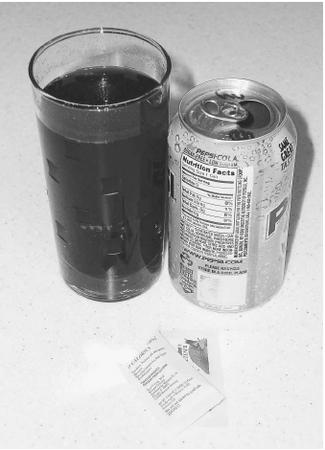
In terms of my own use, I limit aspartame and use Splenda and saccharin a little more freely. I eat very few processed foods, so the bulk of my artificial sweeteners come straight from some kind of packet. I will typically have Splenda or Sweet N' Low Brown in my oatmeal and coffee in the morning, and I often won't have it again for the rest of the day. I cut my diet soda back to about 1-2 can/month about 6 months ago to limit the dye and acid exposure on my teeth. Generally speaking, artificial sweeteners can be very useful for appeasing a sweet-tooth as long as your diet, on the whole, is healthy and unprocessed.

Thursday, December 6, 2007

Low-Cal Pie Filling; Taking Pseudo-Dessert to a New Level!

I was walking through my localgrocery store yesterday when I got distracted by, well, pretty much everything. But one item in particular had me inspecting nutrient labels and scheming new recipes in force.

The product was a Spelda-sweetened cherry pie filling; "no sugar added." So I purchased it and opened the can about three seconds after arriving home. These little cherry bits are absolutely wonderful in a red #40, sucralose-packed kind of way. I just ate it out of the can and added it to my oatmeal in the morning, but you could also:
  • Add it to sugar-free jello in place of cold water


  • Spice it up a little and add it to a homemade graham cracker crust for a totally passable healthyish dessert


  • Mix it with cottage cheese or ricotta cheese for a cherry cheesecake treat

Upon online investigation of online purchase options, I didn't see anything close to the $1.99 deal offered in my local HEB (the large Texas grocery chain); however, I found several other lite fillings. When you are searching, however, make sure that you opt for "no sugar added!" Some manufacturers have simply cut the sugar added by a third, which is still considered "lite," but it the energy content is much higher than the mere 35 Calories per 1/3 cup in the "no sugar added" version.

You may be able to find a store locator for this particular product here

Cheapest online price here

Other interesting Splenda-sweetened pie fillings and other products here

Tuesday, December 4, 2007

Easy Oatmeal Spice Mix


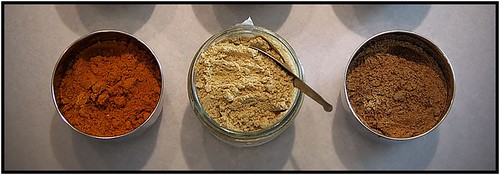
I have oatmeal for my very early mornings (like 4am) and found myself pouring from about 5 different containers to flavor it, which was time consuming (and I really want that extra 5 minutes of sleep)! Then I decided to combine all of the following into a sigle spice bottle to cut down on time and save money:

3 Tablespoons ground cinnamon

1 Tablespoon ground nutmeg

1 Tablespoon ground ginger

1 teaspoon ground cloves

5 Large splenda packets (1 box) (drink mix for pitcher)


The spices can be purchased in a bulk spice section; the drink mix cup equivalent large Splenda packets are the cheapest way to get sucralose in the regular grocery store. I just sprinkle this right on my oatmeal concoctions and eat! Easy as pie, but a lot healthier ;-)


I Gotta Leave 5 Minutes Ago But Gotta Eat Healthy Oatmeal

3 Tablespoons old fashioned oats (30g)

1 cup unsweetened frozen raspberries (240mL)

1 cup high-protein milk (240mL)

1/2 oz of walnuts (15g)

a hearty sprinkling of splenda spice mixture

Nutrition: 333 Calories, 22 protein, 37 g carbs, 8 g fiber, 12 g fat, 350 mg calcium, 4 mg iron, 84mg vitcamin C

This mixture is also tasty on sweet potatoes and canned pumpkin. Mmmmmm...

Monday, December 3, 2007

High Protein Frozen Fudgie Bars

This recipe is great for when you are in the mood for a frozen treat!


Ingredients:

1 16-oz container fat-free cottage cheese

½ cup reduced-fat sour cream

1 scoop whey protein (about 26g)

7 tablespoons sugar-free hot cocoa mix

3/4 cup of frozen raspberries*

2 tsp vanilla extract

a whole lot of Splenda (I used 15-20 packets)


Instructions:

1. Process together until very smooth, about 5 minutes

2. Place into popsicle mold, and freeze completely, about 4 hours.


Makes 10 popsicles


Nutrition: 90 kcal, 11 g protein, 7 g carbs, 2 g fat, 183mg calcium

* Substitute 1/2 cup of high-protein milk if you don't like fruit

Nutrition: 90 kcal, 12 g protein, 5 g carbs, 2 g fat, 181mg calcium

Saturday, December 1, 2007

If I Had to Eat at McDonald's...

The following is the first in a series of blogs that will describe what I would order if I was FORCED to eat at various fast food restaurants. The blogs will offer a dietitian's point of view concerning fast food choices. All options will be less than 35% calories from fat and a reasonable number of total Calories (200-500)


Due to the time demands of daily living, it's difficult to spend limited free time preparing healthy food. Fast food restaurants are a source of quick and tasty calories; however, they pose several nutritional complications-- most fast food menu items are high in fat, calories, and refined carbohydrates. Fast foods are also generally low in vitamins, minerals and fiber. But with a little nutritional strategizing, you can eat quickly without sacrificing all of your nutritional goals!

Food producers and chefs often load fast and processed foods with fat and strip the food of vitamins and minerals. Therefore, it is best to limit food prepared in restaurants and prepare the bulk of the food in the home. Many foods, like brown rice and unbreaded chicken tenders, are easy to cook in bulk and carry in plastic ware. Easy and portable sources of the major nutrients are as follows:

Carbohydrate:
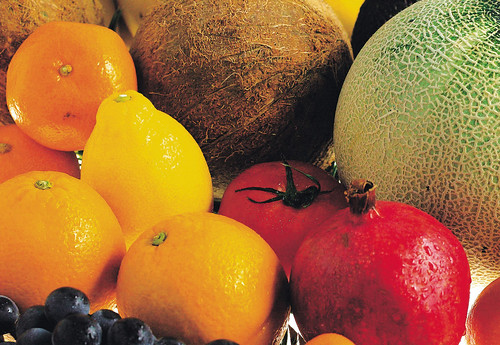
- Fruits: Bananas, Oranges, Apples, and Pears

- Starch: Whole Grain Bread, Rye Crispbread Crackers, Whole Wheat Bagels, Brown Rice, Low-Fat Microwave Popcorn, Whole Grain Cold Cereal

- Vegetables: Carrots, Celery, Broccoli, Cauliflower, String Beans, Sugar Snap Peas, Bell Peppers

Protein:
- Dairy: Shelf Stable (Organic) Carton Milk, Low-Fat Plain and Light Yogurt, Cottage cheese, Whey Powder

- Flesh: Chicken Tenders, Extra Lean Deli Meat, Beef Jerky, Tuna Can/Packets

- Other: Soy Milk, Soy Nuts, Hard Boiled Eggs, Dry Protein Powders (Egg and Soy), Edamame

Fat
- Nuts: Peanut Butter, Almonds, Pistachios, Cashews, Pecans, Walnuts

- Other: Cheese, Mayonnaise, Salad Dressings

Though grocery shopping and bringing healthy foods exclusively from home is the optimal way to eat, it is highly delusional to believe that the majority of people will follow that advise. As such, best breakfast, lunch and dinner fast food choices are offered below:

Breakfast: A sausage biscuit breakfast sandwich from a fast food joint contains 60% of its calories from fat and 600-800 Calories! Eww! Pick something better! In general, avoid added butter, cheese, and mixed dishes, like omelets. All of the following have less than 35% Calories from fat:

McDonald’s: Hotcakes, Plain Bagel, English Muffin, Canadian Bacon, Ham N’ Egg Bagel, Ham N’ Cheese Bagel, Fruit and Yogurt Parfait with Granola, Apple Dippers, Fruit and Walnut Salad

Lunch/Dinner: The average fast food burger contains between 40-50% of total calories from fat! In general, avoid added mayonnaise (and other oil-based condiments), cheese, and high-fat meats. Generally speaking, the best option is to order a non-breaded chicken or cold-cut sandwich with no cheese, mayonnaise or dressing. If the restaurant is a chain with a low-fat menu, items not included in that section are unlikely to be suitable. All of the following have less than 35% calories from fat:

McDonald’s: Grilled chicken Classic Sandwich, Plain Hamburger, Honey Mustard with Grilled Chicken Wrap, Premium Chicken Breast Sandwich, Chipotle Chicken Wrap, Chicken Fajita Sandwich, McVeggie Sandwich, Any Grilled Chicken Salads (without dressing/croutons), Small Vanilla Cone